
'We will be looking to prune our portfolio to make GIC Re a healthier entity.'

The race to get a New Umbrella Entity (NUE) licence for digital payments may get crowded. As many as six consortiums are said to be in the fray to apply for an NUE licence, which would create a for-profit National Payments Corporation of India (NPCI)-like body for retail payments. A consortium led by Financial Software and Systems (FSS), a leading provider of payment products and payment processor, is in talks and may file an application to the RBI for an NUE license, said sources aware of the development. The other constituents of this group include Indian Bank, Central Bank of India, India Post Payments Bank, National Bank for Agriculture and Rural Development (Nabard), and a few small finance banks.

The product, named Saral Suraksha Bima, will have a maximum sum assured of Rs 1 crore and minimum Rs 2.5 lakh.

With inflation under control, the Monetary Policy Committee's (MPC's) job is to support growth because the economy had recovered well from the lows in the initial months of the pandemic, according to the panel's members, who met in the first week of this month. The minutes of the meeting show the Reserve Bank of India (RBI) governor in his statement said: "Given the sharp moderation in inflation along with a stable near-term outlook, monetary policy needs to continue with the accommodative stance to ensure that the recovery gains greater traction and becomes broad-based." Ashima Goyal, external member of the MPC, said: "The current macroeconomic configuration and its expected future evolution imply there is space for the MPC to continue to support the revival of the economy with inflation remaining in the target band."

While it took UPI three years to reach a billion transactions in a month, the next billion came in just a year. Digital payments, especially UPI, saw increased adoption in 2020 due to the Covid-19 pandemic.

Digital lending apps extend small amounts at exorbitant rates. Payment delays invite messages to customer or close family members, often with sensitive information such as Aadhaar and PAN Card scans.

A user just needs to download any app floated by such fraudsters and apply for instant loans. These apps are mainly concentrated on Google Play considering the reach and popularity of Android systems.

These top two apps account for more than 78 per cent of the UPI market in terms of volume of transaction, and 86 per cent of the market by value of transactions in December.

Irdai had introduced two Covid specific products in the market - Corona Kavach and Corona Rakshak - that saw huge acceptance among the consumers as these products had lower premiums.

Surge in UPI transactions is because of an increased consumer interest in making bill payments and recharging mobile phones online, and purchase of non-essential goods on e-commerce platforms.

This will help expand the distribution channels, said Subhash Chandra Khuntia, chairman of the insurance regulatory and development authority of India.

Mutual funds aspirants have the option of snapping up smaller AMCs or applying for a new licence.
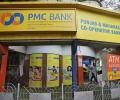
In its EoI document, the bank had said it was open to converting into a small finance bank.

'We tightened our risk frameworks once the Covid crisis started.' 'We are slowly lightening this as we see economic activity pick up, salaries getting restored, and people getting back into jobs.'
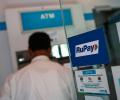
RuPay National Common Mobility Card's offline wallet can be used to make ticket payments in transit, including in metros, cabs, etc, enabling automatic, quick, cashless payments.

While the stress is lower than projections, it would be higher than what we saw last year because of the pandemic: Axis.

According to the data compiled by General Insurance Council, which is not publicly available, the insurers have settled 508,334 claims amounting to over Rs 4,800 crore.

'In FY21, as of October, LIC has booked a profit of Rs 18,800 crore through sale of equities.'

Assuming that the value of LIC's holding has risen in line with the markets, its portfolio size today could be around $86 billion, higher than the previous record of $84 billion in March 2018.

Under the co-lending model, banks have to take their share of the individual loans on a back-to-back basis on their books while NBFCs are required to retain a minimum of 20 per cent share of the individual loans on their books.
 © 2025 Rediff.com - Investor Information - Advertise with us - Disclaimer - Privacy Policy - Sitemap - Feedback - About us - Terms of use - Grievances